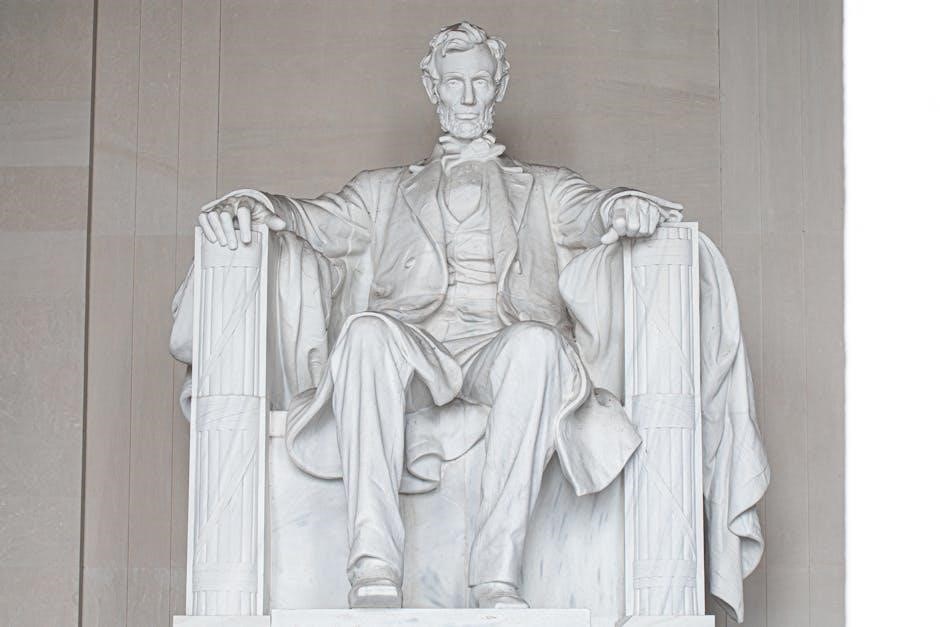
ultimate guide to the presidents worksheet answers
Ultimate Guide to Presidents Worksheet Answers: An Overview
Navigating presidential worksheets requires understanding key facts about each leader‚ from birthdates to terms served and political affiliations.
Currently‚ there have been 46 U.S. presidents‚ with information readily available through various online resources and historical associations;
What are “Presidents Worksheets”?
Presidents worksheets are educational tools designed to assess and reinforce knowledge about the individuals who have held the highest office in the United States. These resources typically present information about each president‚ often requiring students to recall details like dates of service‚ political party‚ and significant accomplishments.
Worksheets can take various forms‚ including chronological ordering exercises‚ matching activities‚ multiple-choice questions‚ and fill-in-the-blank prompts. They are commonly used in classrooms‚ homeschooling environments‚ and for self-study‚ aiming to build a foundational understanding of American history and civics. As of 2026‚ these worksheets cover all 46 presidents.
Why are these Worksheets Used?
Presidents worksheets serve multiple educational purposes‚ primarily to solidify understanding of American history and the roles of its leaders. They help students learn chronological order‚ a crucial skill for grasping historical context. Furthermore‚ these worksheets reinforce factual recall – birthdates‚ terms in office‚ and party affiliations – building a strong base of presidential knowledge.
Beyond memorization‚ worksheets encourage critical thinking by prompting students to identify accomplishments and understand the impact of each president. They are valuable tools for educators and self-learners alike‚ fostering civic engagement and a deeper appreciation for the American presidency‚ encompassing all 46 individuals who have served.

Historical Context for Presidential Information
Understanding the eras each president navigated – from the nation’s founding to modern times – is vital for interpreting their actions and legacies.
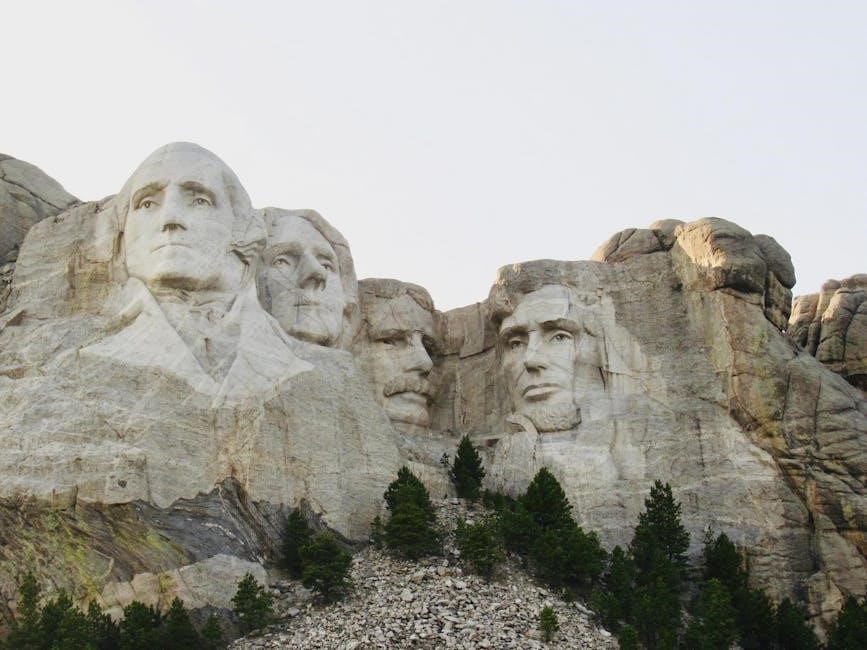
The First Presidents: Washington to Adams
George Washington‚ the inaugural president‚ established many precedents for the office‚ leading the young nation through its formative years. His leadership was crucial during the Revolutionary War and the subsequent establishment of a stable government.
Following Washington‚ John Adams faced challenges including navigating foreign policy issues with France and dealing with domestic political divisions. These early presidencies were pivotal in defining the role of the executive branch and setting the course for American governance.
Worksheets often focus on their contributions to establishing the Constitution and early federal institutions.
The 19th Century Presidents: Expansion and Civil War
The 19th century witnessed significant territorial expansion under presidents like Thomas Jefferson with the Louisiana Purchase and James K. Polk with the Mexican-American War. These acquisitions dramatically reshaped the nation’s geography and fueled debates over slavery.
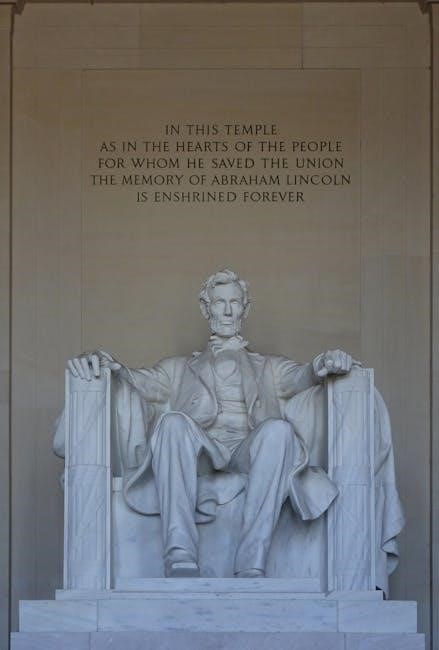
Abraham Lincoln led the country through the Civil War‚ issuing the Emancipation Proclamation and ultimately preserving the Union. Worksheets frequently assess understanding of the causes and consequences of the Civil War‚ and Lincoln’s role in it.
Presidents of this era faced immense challenges related to sectionalism and national unity.
The 20th and 21st Century Presidents: Modern America
The 20th and 21st centuries brought transformative changes‚ with presidents navigating world wars‚ the Cold War‚ and the rise of globalization. Franklin D. Roosevelt’s New Deal addressed the Great Depression‚ while presidents like John F. Kennedy confronted the Civil Rights Movement.
Worksheets often focus on key events like the Vietnam War‚ the Watergate scandal‚ and the September 11th attacks‚ and the presidential responses to these crises.
Modern presidencies are characterized by increased executive power and complex domestic and foreign policy challenges.

Key Information Found on Presidents Worksheets
Essential details include presidential order‚ birth and death dates‚ years in office‚ and political party affiliation – crucial for accurate completion and understanding;
Presidential Order and Numbering
Understanding the numbering of U.S. presidents is often a core component of worksheets‚ yet it’s surprisingly nuanced. Presidents are numbered sequentially based on uninterrupted periods served. This means Grover Cleveland‚ serving two non-consecutive terms‚ is counted as both the 22nd and 24th president.
Worksheets frequently test this knowledge‚ requiring students to identify the correct numerical order. As of today‚ February 10‚ 2026‚ there have been 46 presidents‚ and accurately recalling this sequence is vital. Resources like the American Presidency Project offer comprehensive lists for verification.
Birth and Death Dates
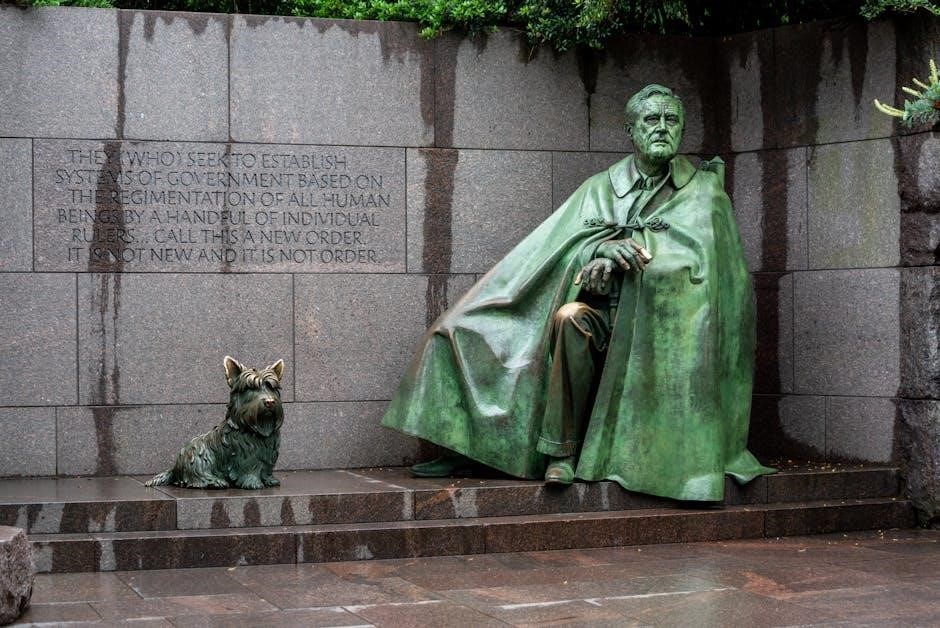
Presidents’ birth and death dates are fundamental facts tested on worksheets‚ demanding precise recall. Knowing these dates provides historical context and helps establish a timeline of leadership. Resources like biographical directories and encyclopedias (Britannica‚ Wikipedia) are crucial for accurate information.
For example‚ while John F. Kennedy was the youngest president at 43‚ understanding his lifespan (1917-1963) adds depth. Similarly‚ knowing Joe Biden’s birthdate helps contextualize his recent presidency. Worksheets often require matching dates to presidents‚ reinforcing this knowledge.
Years Served in Office
Determining the years each president served is a core skill for completing these worksheets accurately. Franklin D. Roosevelt holds the record for the longest service‚ despite not completing his fourth term. Worksheets frequently ask for chronological ordering based on these dates.
Understanding that the Twenty-Second Amendment‚ adopted in 1951‚ limits presidents to two terms is vital. Knowing the start and end dates of each presidency allows for correct placement on a timeline and accurate answers to comparative questions. Reliable sources confirm these crucial details.
Political Party Affiliation
Identifying a president’s political party is a frequent component of these worksheets‚ requiring knowledge of historical party systems. The information provided details each president’s affiliation‚ crucial for understanding their policies and the political climate of their time.
Worksheets often test understanding of how party dominance has shifted throughout American history. Knowing whether a president was a Federalist‚ Democratic-Republican‚ Democrat‚ or Republican is essential. Accurate completion relies on referencing reliable sources that clearly state each leader’s party alignment.
Common Worksheet Question Types
Expect questions involving chronological order‚ matching terms to presidents‚ identifying accomplishments‚ and multiple-choice tests on presidential facts and historical context.
Chronological Ordering of Presidents
A frequent worksheet task involves arranging presidents in the correct order of their terms. This tests understanding of American history and presidential succession. Students typically begin with George Washington‚ the first president‚ and proceed through to the current president‚ Joe Biden – the 46th.
Worksheets often present presidents in a scrambled list‚ requiring students to recall their order based on dates served. Mastering this skill necessitates familiarity with key periods of American history‚ like the 19th-century expansion and the Civil War era‚ and the modern presidencies of the 20th and 21st centuries.
Matching Presidents to Their Terms
Commonly‚ worksheets challenge students to match presidents with the years they served in office. This assesses recall of specific historical timelines and presidential administrations. For example‚ students must connect Franklin D. Roosevelt with his lengthy tenure‚ spanning multiple terms until his death in office.
Accuracy requires knowing when each president began and ended their service‚ often presented as a list of presidents and a separate list of term dates. Successfully completing this task demonstrates a grasp of presidential history and the duration of each leader’s impact on the nation.
Identifying Presidential Accomplishments
Worksheets frequently ask students to identify significant accomplishments of each president‚ testing their understanding beyond simple dates and terms. This requires knowledge of key policies‚ landmark decisions‚ and impactful events during each administration.
For instance‚ students might link Abraham Lincoln to the Emancipation Proclamation or George Washington to establishing the nation’s financial system. Recognizing these achievements demonstrates a deeper comprehension of presidential legacies and their lasting contributions to American history and society‚ fostering critical thinking skills.
Multiple Choice Questions on Presidential Facts
A common worksheet format involves multiple-choice questions testing recall of presidential facts. These questions often cover birth and death dates‚ years served‚ and political party affiliations‚ demanding precise knowledge.
Students might be asked to identify the youngest president (John F. Kennedy‚ age 43) or the longest-serving (Franklin D. Roosevelt). Distractors are designed to assess understanding‚ not just memorization. Successfully answering these questions demonstrates a solid grasp of fundamental presidential history and the ability to differentiate between key details.

Resources for Finding Answers
Reliable sources like the American Presidency Project‚ the White House Historical Association‚ and biographical directories offer comprehensive presidential information for worksheet completion;
The American Presidency Project Website
The American Presidency Project‚ hosted by UC Santa Barbara‚ stands as an invaluable resource for anyone tackling presidents worksheets. This website provides a meticulously curated collection of documents and information relating to every U.S. president. Users can explore comprehensive presidential data‚ including inaugural addresses‚ public papers‚ and biographical details.
It features interactive timelines and allows for detailed exploration of each presidency’s contributions. The site’s user-friendly interface makes it easy to locate specific facts needed to accurately answer worksheet questions‚ ensuring a thorough understanding of presidential history and accomplishments.
White House Historical Association
The White House Historical Association offers a wealth of resources perfect for completing presidents worksheets with accuracy and depth. Dedicated to preserving the history of the White House‚ the association provides detailed biographical information on each president‚ alongside insights into their lives and administrations.
Their website features articles‚ timelines‚ and educational materials that illuminate presidential accomplishments and the context of their terms. This resource is particularly helpful for understanding the nuances of each presidency‚ going beyond simple dates and facts to provide a richer historical perspective.
Biographical Directory of the United States Congress
For detailed and verified information regarding presidential backgrounds‚ the Biographical Directory of the United States Congress is an invaluable resource. While focused on members of Congress‚ it includes comprehensive biographical details for presidents before and during their time in office.
This directory provides accurate birth and death dates‚ political affiliations‚ and often‚ details about their early life and education – crucial for answering worksheet questions. It’s a reliable source for confirming factual information and ensuring the accuracy of completed assignments‚ offering a scholarly approach to presidential research.
Reliable Online Encyclopedias (Britannica‚ Wikipedia)
Both Britannica and Wikipedia offer accessible presidential information‚ though discernment is key. Britannica provides thoroughly vetted‚ scholarly articles‚ ideal for confirming critical facts for worksheets.
Wikipedia‚ while collaboratively edited‚ can be a useful starting point‚ but always cross-reference information with more authoritative sources. Both platforms detail birthdates‚ terms served‚ and political parties‚ aiding in completing matching and chronological ordering questions. Remember to evaluate sources critically and prioritize Britannica for definitive answers.
Understanding Presidential Term Limits
The Twenty-Second Amendment‚ adopted in 1951‚ restricts presidents to a maximum of two terms in office‚ shaping worksheet questions about succession.
The Twenty-Second Amendment
Ratified in 1951‚ the Twenty-Second Amendment formally limits a president to two terms in office‚ a direct response to Franklin D. Roosevelt’s four terms. This amendment clarifies presidential term limits‚ impacting how students answer worksheet questions regarding succession and historical precedents.
Prior to this‚ the tradition of a two-term limit‚ established by George Washington‚ was merely a custom. The amendment ensures no future president can serve more than eight years‚ or complete the term of a predecessor and then serve more than ten years total. Understanding this amendment is crucial for accurately completing presidents’ worksheets.
Exceptions and Historical Context
While the Twenty-Second Amendment is clear‚ historical context is vital. Grandfather clauses didn’t apply retroactively‚ meaning Harry Truman‚ who succeeded FDR‚ could serve almost two full terms. Worksheets often test understanding of this nuance.
Before the amendment‚ the two-term tradition was broken only by FDR due to the extraordinary circumstances of the Great Depression and World War II. Students should recognize this unique period. The amendment arose from concerns about concentrated power‚ shaping modern presidential limitations and influencing worksheet answer interpretations.

Frequently Asked Questions (FAQs)
Common questions involve presidential ages‚ term lengths‚ and the total number of presidents—currently 46. Worksheets frequently assess these fundamental historical facts.
What is the longest presidential term?
Determining the longest presidential term requires careful consideration of historical context and constitutional amendments. Franklin Delano Roosevelt served the longest‚ elected to four terms‚ a feat unmatched by any other president.
However‚ he died early into his fourth term in 1945. This led directly to the passage of the Twenty-Second Amendment in 1951‚ which now limits presidents to a maximum of two terms in office.
Therefore‚ while Roosevelt technically held office the longest‚ no president can now exceed eight years—or ten if assuming office mid-term—due to this amendment.
Who was the youngest president?
John F. Kennedy holds the distinction of being the youngest person to assume the presidency of the United States. He was inaugurated at the age of 43 years and 236 days on January 20‚ 1961.
His youthful energy and charisma captivated the nation‚ marking a new era in American politics. Theodore Roosevelt was previously the youngest to become president‚ but he assumed office due to William McKinley’s assassination.
Kennedy’s election represented a generational shift and continues to be a significant point of interest when studying presidential history.
Who was the oldest president?
As of today‚ February 10‚ 2026‚ Joe Biden is the oldest president in United States history. He assumed office on January 20‚ 2021‚ at the age of 78 years and 61 days.
Biden surpassed Ronald Reagan‚ who was 69 years and 349 days old when he left office in 1989‚ as the oldest to serve as president. His continued service has sparked discussions about age and presidential capability.
This milestone highlights the evolving demographics of leadership in the modern era and prompts reflection on the physical demands of the office.
How many presidents have there been?
As of February 10‚ 2026‚ the United States has had a total of 46 presidents. This number represents all individuals who have held the office of President‚ starting with George Washington in 1789.
The count includes presidents who served multiple‚ non-consecutive terms‚ as they are numbered according to uninterrupted periods in office.
Understanding this figure is fundamental when completing presidents’ worksheets‚ particularly those focused on chronological order or presidential numbering. The list extends to Donald Trump‚ with future presidents adding to this historical count.
Tips for Completing Presidents Worksheets
Always double-check dates and spellings‚ utilize reliable sources like the American Presidency Project‚ and carefully understand each question’s intent for accuracy.
Double-Check Dates and Spellings
Accuracy is paramount when completing presidents worksheets. Even a minor error in a date – a president’s birth year‚ term start‚ or death date – can lead to an incorrect answer. Similarly‚ misspellings of presidential names or key terms demonstrate a lack of attention to detail.
Remember that historical records are precise. Resources like the Biographical Directory of the United States Congress and reputable encyclopedias (Britannica) offer verified information. Cross-reference details whenever possible. A quick review before submission can significantly improve your score and demonstrate a commitment to factual correctness.
Utilize Reliable Sources
Success on presidents worksheets hinges on consulting trustworthy information. The American Presidency Project website and the White House Historical Association are excellent starting points‚ offering thoroughly researched presidential data.
Avoid relying solely on potentially inaccurate or biased online sources. Prioritize established encyclopedias like Britannica and‚ with caution‚ Wikipedia (always cross-reference). The Biographical Directory of the United States Congress provides verified biographical details. Using these resources ensures you’re working with factual information‚ leading to accurate answers and a deeper understanding of presidential history.
Understand the Question’s Intent
Before answering‚ carefully dissect each question on the presidents worksheet. Is it asking for a chronological order‚ a matching of presidents to their terms‚ or identification of key accomplishments?
Pay close attention to keywords like “longest‚” “youngest‚” or “oldest‚” as these direct you to specific facts. Recognizing whether the question requires dates‚ political affiliations‚ or biographical details is crucial. Misinterpreting the intent leads to incorrect answers‚ even with accurate knowledge. Thorough comprehension is key to success!
Review Your Answers
After completing the presidents worksheet‚ dedicate time to a thorough review. Double-check all dates – birth and death‚ and years served – for accuracy. Verify spellings of presidential names and associated terms.
Ensure your chronological order is correct and that matches are precise. Consider if your answers logically align with known historical events. A final review minimizes careless errors and solidifies your understanding of presidential history‚ boosting confidence in your completed work.
Advanced Worksheet Topics
Exploring presidential succession and the complex roles/responsibilities of the office deepens understanding beyond basic facts‚ offering a challenging extension.
Presidential Succession
Understanding presidential succession is crucial for advanced worksheet comprehension. The Vice President assumes the presidency if the president dies‚ resigns‚ or is removed from office. However‚ the line of succession extends beyond the VP‚ following a specific order established by law.
This order prioritizes key government officials‚ ensuring continuity of leadership. Worksheets might ask students to identify individuals in the succession line or analyze scenarios involving presidential incapacitation. Knowing this process demonstrates a deeper grasp of the American political system and safeguards against leadership vacuums.
Roles and Responsibilities of the President
Presidential worksheets often explore the multifaceted roles of the Commander-in-Chief. Beyond leading the military‚ the President is also Chief Executive‚ enforcing laws passed by Congress. They act as Chief Diplomat‚ negotiating treaties and representing the U.S. internationally.
Furthermore‚ the President is Head of State‚ symbolizing the nation‚ and Chief Legislator‚ influencing the legislative agenda. Understanding these diverse responsibilities is key to answering worksheet questions about presidential power and influence within the American government’s framework.












Leave a Comment