
mindfulness journal prompts pdf
Mindfulness journaling, especially utilizing PDF prompts, offers a powerful pathway to self-discovery and emotional well-being. Resources like ‘The Everyday Positive Journal’ demonstrate its impact.
SGLT2 inhibitors, studied in trials like EMPA-KIDNEY, show benefits alongside mindful practices, highlighting a holistic approach to health and inner peace.
What is a Mindfulness Journal?
A mindfulness journal isn’t simply a diary; it’s a dedicated space for cultivating present moment awareness and non-judgmental observation of your thoughts and feelings. Utilizing mindfulness journal prompts, often conveniently found in PDF format, guides this process. These prompts, as seen in resources like ‘The Everyday Positive Journal’, encourage introspection and self-reflection.
Unlike traditional journaling focused on recounting events, a mindfulness journal centers on how you experience those events. Research, including the EMPA-KIDNEY trial findings regarding SGLT2 inhibitors and kidney health, underscores the importance of holistic well-being. A mindful journal contributes to this by fostering emotional regulation and self-compassion, offering a tool for navigating life’s challenges with greater ease and clarity.
Benefits of Using Mindfulness Journal Prompts
Mindfulness journal prompts, particularly those accessed as convenient PDF downloads, offer structured guidance for cultivating self-awareness. They bypass the “blank page” paralysis, initiating reflection on emotions, stressors, and gratitude. Resources like ‘The Everyday Positive Journal’ exemplify this benefit, promoting personal growth and enriched connections.
Studies, such as EMPA-KIDNEY examining SGLT2 inhibitors, highlight the interconnectedness of physical and mental health. Journaling supports emotional regulation, potentially mitigating stress – a factor impacting overall well-being. Prompts encourage reframing negative thoughts and practicing self-compassion, fostering resilience and a more positive outlook on life’s challenges.
Why PDF Format for Journal Prompts?
PDF format provides unparalleled accessibility and convenience for mindfulness journal prompts. They are easily downloadable, printable, and portable – allowing for journaling anywhere, anytime, without requiring an internet connection. This contrasts with online prompts that may be subject to website changes or accessibility issues.
Furthermore, PDFs offer a distraction-free experience, promoting focused reflection. Considering research like the EMPA-KIDNEY trial’s focus on holistic health, a dedicated journaling space is valuable. The format also allows for customization – adding personal notes or creating themed collections, enhancing the journaling practice’s effectiveness.

Core Mindfulness Journaling Techniques
Mindfulness journaling, aided by PDF prompts, centers on present moment awareness, non-judgmental observation, and acceptance – fostering emotional regulation and well-being.
Focusing on the Present Moment
Mindfulness journaling, enhanced with readily available PDF prompts, powerfully anchors you in the ‘now’. Instead of dwelling on past regrets or future anxieties, prompts encourage detailed descriptions of current sensations – what you see, hear, smell, taste, and touch.
This practice, mirroring mindful meditation, cultivates awareness of fleeting thoughts and emotions without getting carried away by them. The act of writing itself becomes a grounding exercise. Consider prompts asking about your body’s physical sensations or the immediate environment.
Studies like EMPA-KIDNEY, while focused on physical health, underscore the interconnectedness of mind and body, making present moment focus crucial for overall well-being.
Non-Judgmental Observation
Mindfulness journal prompts, often found in convenient PDF formats, are designed to foster a stance of impartial observation. The core principle is to record thoughts and feelings as they are, without labeling them as “good” or “bad,” “right” or “wrong.”
This detachment is key. Prompts might ask you to describe an emotion without analyzing its cause or judging its validity. Simply note its presence. Like the objective data collection in trials such as EMPA-KIDNEY, this approach prioritizes factual awareness.
Cultivating this skill reduces self-criticism and allows for a more compassionate understanding of your inner experience.
Acceptance and Letting Go
Mindfulness journal prompts, readily available as PDF downloads, frequently guide you toward acceptance – acknowledging your present experience without resistance. This isn’t about liking difficult emotions, but recognizing their temporary nature.
Prompts might encourage you to explore feelings like anxiety or sadness, then gently release the need to control or change them. Similar to how SGLT2 inhibitors address kidney disease progression, acceptance allows for a natural unfolding.
Letting go doesn’t mean ignoring problems; it means freeing yourself from the suffering caused by clinging to them.

Types of Mindfulness Journal Prompts
Mindfulness journal prompts in PDF format span self-awareness, emotional regulation, and gratitude. These tools, like those in ‘The Everyday Positive Journal’, foster growth.
Prompts for Self-Awareness
Self-awareness prompts within mindfulness journal PDFs encourage deep introspection. Consider questions like: “What sensations am I experiencing right now, without judgment?” or “What beliefs are shaping my current reactions?”.
These prompts, mirroring the intent of resources like ‘The Everyday Positive Journal’, help identify patterns in thoughts, feelings, and behaviors. Exploring these patterns, as supported by studies on SGLT2 inhibitors like empagliflozin and their impact on overall well-being, can reveal underlying motivations and triggers.
Further prompts might ask: “What are my core values, and how am I living in alignment with them?” or “What are my strengths and weaknesses?”. Consistent use fosters a clearer understanding of one’s inner landscape.
Prompts for Emotional Regulation
Mindfulness journal PDFs offering emotional regulation prompts are invaluable tools for navigating challenging feelings. Questions like, “What is this emotion trying to tell me?” or “Can I observe this feeling without getting carried away by it?” promote a non-judgmental approach.
These prompts, akin to the practices encouraged in ‘The Everyday Positive Journal’, help develop emotional resilience. Considering the positive cardiorenal effects observed in trials like EMPA-KIDNEY, a holistic approach to well-being is key.
Further prompts could include: “What self-compassion can I offer myself right now?” or “What healthy coping mechanisms can I utilize?”.
Prompts for Gratitude and Positivity
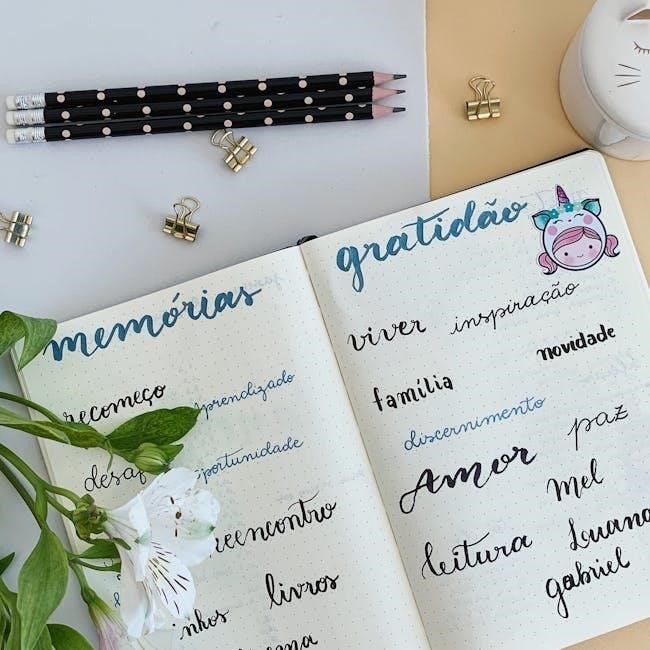
Mindfulness journal PDFs brimming with gratitude prompts cultivate a positive mindset. Simple questions like, “What three things am I grateful for today?” or “Who is someone I appreciate and why?” shift focus towards positivity, mirroring the impact of ‘The Everyday Positive Journal’.
Considering the broader health benefits, like those observed in the EMPA-KIDNEY trial, a positive outlook can complement physical well-being. Prompts could also explore “What small joy did I experience today?” or “What is one thing I like about myself?”.
Regularly practicing gratitude fosters resilience and contentment.

Specific Journal Prompts – Exploring Feelings
Mindfulness journal PDFs offer prompts to identify emotions, trace their origins, and practice acceptance—a crucial step towards emotional regulation and overall well-being.
Identifying Current Emotions
Mindfulness journal prompts in PDF format can be incredibly effective for pinpointing your present emotional state. Begin by simply noting what you’re feeling right now, without judgment. Are you experiencing joy, sadness, anger, or perhaps a complex blend?
Prompts might ask: “What physical sensations accompany this emotion?” or “If this feeling had a color, what would it be?” The EMPA-KIDNEY trial’s focus on holistic well-being underscores the importance of acknowledging internal states. Regularly identifying emotions, facilitated by journaling, builds self-awareness and allows for healthier coping mechanisms, fostering a deeper connection with your inner experience.
Tracing the Origins of Feelings
Mindfulness journal prompts, often available as PDFs, can guide you to explore the roots of your emotions. Don’t simply identify what you feel, but why. What triggered this emotional response? Was it a recent event, a past memory, or a deeply held belief?
Prompts like “What thoughts preceded this feeling?” or “Is this feeling connected to a past experience?” can be invaluable. Similar to how EMPA-KIDNEY investigated underlying causes of kidney disease, journaling helps uncover the origins of emotional distress. Understanding these connections fosters self-compassion and empowers you to address the core issues.
Accepting Difficult Emotions
Mindfulness journal prompts, frequently found in PDF format, encourage non-judgmental acceptance of challenging emotions. Instead of resisting or suppressing feelings like sadness, anger, or anxiety, acknowledge their presence. Prompts such as “What sensations do I experience when feeling this emotion?” can ground you in the present moment.
Remember, emotions are temporary states, much like the observed benefits in trials like EMPA-KIDNEY – changes occur over time. Acceptance doesn’t mean liking the feeling, but allowing it to be without self-criticism. This practice cultivates emotional resilience and inner peace.

Specific Journal Prompts – Cultivating Gratitude
Mindfulness journal prompts in PDF format foster gratitude through daily lists and appreciation for small joys, enriching connections and personal growth, as seen in positive psychology.
Daily Gratitude Lists
Utilizing mindfulness journal prompts, specifically in PDF format, encourages the consistent practice of listing things you are grateful for each day. This simple yet profound exercise shifts focus from what’s lacking to what is present and positive in your life.
Consider prompts like, “What three things brought you joy today?” or “Who is someone you appreciate and why?” The ‘Everyday Positive Journal’ exemplifies this approach. Regularly acknowledging these blessings, even small ones, cultivates a more optimistic outlook.
Research, including studies on SGLT2 inhibitors like those from the EMPA-KIDNEY trial, suggests a link between positive mental states and overall well-being, reinforcing the value of gratitude practices.
Gratitude for Small Things
Mindfulness journal prompts in PDF format can specifically guide you to appreciate the often-overlooked joys in daily life. It’s easy to focus on grand achievements, but cultivating gratitude for “small things” is powerfully transformative. Prompts might ask: “What simple pleasure did you experience today?” or “What small act of kindness did you witness?”
This practice, similar to the focus on well-being promoted by resources like ‘The Everyday Positive Journal’, fosters contentment. Recognizing the beauty in a warm cup of tea, a sunny day, or a friendly smile builds resilience.
Even alongside medical advancements like those seen in the EMPA-KIDNEY trial, appreciating life’s small joys remains vital for holistic health.
Expressing Gratitude to Others
Mindfulness journal prompts, readily available as PDFs, can powerfully shift your focus outwards, encouraging gratitude towards the people in your life. Prompts might include: “Who made you smile today and why?” or “Whose support are you particularly thankful for?”
Journaling about specific acts of kindness received strengthens relationships and fosters a sense of connection. This practice, echoing the relational enrichment found in ‘The Everyday Positive Journal’, cultivates empathy and compassion;
Acknowledging others’ contributions, even alongside focusing on personal health – as seen in trials like EMPA-KIDNEY – enhances overall well-being and builds a supportive network.
Specific Journal Prompts – Managing Stress & Anxiety
Mindfulness journal PDFs offer prompts to identify stressors and reframe negative thoughts, promoting self-compassion – vital alongside health considerations like those in EMPA-KIDNEY trials.
Identifying Stressors
Mindfulness journal prompts in PDF format can be incredibly effective for pinpointing the sources of stress in your life. Begin by listing situations, people, or thoughts that consistently evoke feelings of anxiety or overwhelm. Be specific; instead of “work,” write “deadline pressure at work” or “difficult interactions with a colleague.”
Explore the physical sensations that accompany these stressors – tightness in your chest, racing heart, or clenched jaw. Recognizing these bodily cues can provide early warnings. Consider how these stressors relate to broader patterns in your life, and remember that, similar to managing health conditions studied in trials like EMPA-KIDNEY, identifying the root cause is the first step towards effective management.
Reframing Negative Thoughts
Mindfulness journal prompts, conveniently accessed via PDFs, can guide you in challenging and reshaping negative thought patterns. When a critical thought arises, write it down. Then, question its validity: Is it based on facts or assumptions? Is there another way to interpret the situation?
Practice replacing harsh self-criticism with compassionate self-talk. Explore alternative perspectives, seeking evidence that contradicts the negative thought. This process, akin to the positive impacts observed in trials like EMPA-KIDNEY on overall well-being, fosters resilience and a more balanced outlook. Remember, thoughts are not facts, and you have the power to choose how you respond to them.
Practicing Self-Compassion
Mindfulness journal prompts in PDF format can cultivate self-compassion, a vital skill for emotional resilience. When facing difficulties, write as if you were comforting a dear friend experiencing the same struggle. What words of kindness and understanding would you offer them? Extend that same compassion to yourself.
Acknowledge your suffering without judgment, recognizing that imperfection is a universal human experience. Explore prompts focused on self-kindness, reminding yourself of your strengths and inherent worth. Similar to the positive cardiorenal effects seen in trials like EMPA-KIDNEY, self-compassion nurtures inner health and well-being.

Empagliflozin & Kidney Health – Relevant Context (Based on Provided Data)
EMPA-KIDNEY trial findings demonstrate SGLT2 inhibitors’ positive cardiorenal effects in chronic kidney disease, mirroring the holistic benefits of mindfulness journal prompts PDF.
EMPA-KIDNEY Trial Findings
The EMPA-KIDNEY trial, a pivotal phase 3 randomized controlled study, revealed significant positive cardiorenal effects of empagliflozin, an SGLT2 inhibitor, in patients with chronic kidney disease at risk. Notably, the trial was stopped early due to demonstrated efficacy, a testament to the drug’s impact.
While limiting complete subgroup analysis, findings suggest benefits across various kidney disease presentations, even with or without type 2 diabetes. This parallels the broad applicability of mindfulness journal prompts PDF, offering tailored self-reflection. Further analyses from EMPA-KIDNEY and DAPA-CKD consistently show substantial slowing of chronic kidney disease progression, reinforcing the value of proactive health management, much like consistent journaling.
SGLT2 Inhibitors and Chronic Kidney Disease
SGLT2 inhibitors, like empagliflozin, have emerged as crucial therapeutics in managing chronic kidney disease (CKD), demonstrating a remarkable ability to slow its progression. Trials such as EMPA-KIDNEY and DAPA-CKD consistently reveal substantial benefits, irrespective of the underlying cause of CKD.
This consistent positive outcome mirrors the consistent benefits of utilizing mindfulness journal prompts PDF for sustained emotional and mental wellbeing. Just as SGLT2 inhibitors address a physiological pathway, journaling addresses internal emotional landscapes. The trials highlight efficacy even in diverse patient populations, similar to the adaptable nature of personalized journaling practices.
Cardiorenal Effects of Empagliflozin
Empagliflozin exhibits significant cardiorenal effects, extending beyond glycemic control in patients with type 2 diabetes and cardiovascular (CV) disease. The EMPA-REG OUTCOME trial demonstrated a reduced risk of CV events, alongside a decrease in the progression of chronic kidney disease (CKD). This dual benefit underscores a holistic approach to patient health.
Similarly, integrating mindfulness journal prompts PDF fosters a holistic sense of wellbeing, addressing both emotional and mental health. Just as empagliflozin impacts multiple systems, journaling can positively influence various aspects of life, promoting resilience and self-awareness.

Creating Your Own Mindfulness Journal Prompts
Personalized prompts, beyond PDF resources, deepen self-reflection. Tailor questions to your needs, using open-ended formats for richer insights and sustained practice.
Tailoring Prompts to Your Needs
While numerous mindfulness journal prompts PDFs exist, the most impactful practice involves customization. Reflect on your current challenges, emotional patterns, and areas where you seek growth. Consider what specifically triggers stress or anxiety, drawing inspiration from trials like EMPA-KIDNEY which highlight interconnectedness of well-being.
Adapt existing prompts or create entirely new ones that resonate with your unique experiences. Don’t hesitate to modify language to feel more authentic and accessible. A prompt focused on gratitude, for example, could be adjusted to specifically acknowledge small daily joys, mirroring the positive impact described in resources like ‘The Everyday Positive Journal’.
Using Open-Ended Questions
Mindfulness journal prompts PDFs are most effective when employing open-ended questions. Avoid prompts requiring simple “yes” or “no” answers. Instead, encourage exploration and detailed reflection. For instance, instead of “Did you feel grateful today?”, ask “What moments today sparked a feeling of gratitude within you?”
This approach, similar to the self-discovery fostered by resources like ‘The Everyday Positive Journal’, allows for nuanced responses and deeper self-awareness. Consider questions that invite exploration of emotions, mirroring the holistic health focus seen in studies like EMPA-KIDNEY, acknowledging mind-body connection.
Regular Review and Adjustment
Mindfulness journal prompts PDFs aren’t static; they require periodic review and adjustment. What resonates today might not tomorrow. Regularly assess which prompts yield the most insightful responses and discard those that feel unproductive. This mirrors the adaptive nature of health interventions, like those studied in EMPA-KIDNEY, tailoring approaches to individual needs.
Consider your evolving emotional landscape and life circumstances. Introduce new prompts based on current challenges or areas for growth, similar to how ‘The Everyday Positive Journal’ aims for sustainable practice. This ensures continued benefit and prevents journaling from becoming rote.

Resources for Mindfulness Journaling PDFs
Online databases and free printable PDFs offer diverse mindfulness journal prompts. Paid resources, like curated journals, provide structured guidance for deeper self-reflection.
Online Databases of Prompts
Numerous websites curate extensive collections of mindfulness journal prompts, often available as downloadable PDFs. These databases cater to various needs, offering prompts focused on gratitude, self-awareness, emotional regulation, and stress management. Exploring these resources provides a wealth of options for individuals seeking guided journaling experiences.
Many platforms allow users to filter prompts based on specific themes or challenges, ensuring a personalized approach. While exploring, remember the positive impact of practices alongside medical advancements, like those seen in the EMPA-KIDNEY trial, demonstrating a holistic view of well-being. These online hubs are excellent starting points for building a consistent journaling habit, fostering self-discovery and inner peace.
Free Printable PDFs
A significant number of websites offer free printable PDF versions of mindfulness journal prompts. These readily accessible resources eliminate the need for manual writing, providing pre-formatted pages for daily reflection. They often include themed prompts, encouraging exploration of gratitude, self-compassion, and emotional awareness.
These PDFs are particularly useful for beginners or those seeking a structured approach to journaling. Just as studies like EMPA-KIDNEY highlight the benefits of proactive health management, consistent journaling supports mental and emotional well-being. Utilizing these free resources makes mindfulness practice convenient and accessible, fostering a regular habit of self-reflection.
Paid Journaling Resources
While numerous free PDFs exist, paid journaling resources often provide a more comprehensive and curated experience. These may include beautifully designed journals, workbooks with in-depth exercises, and access to online communities for support and guidance. Resources like ‘The Everyday Positive Journal’ exemplify this enhanced approach.
Investing in a paid resource can offer greater structure and motivation, similar to the focused benefits observed in trials like EMPA-KIDNEY. These often feature specialized prompts tailored to specific needs, such as anxiety management or grief processing, offering a deeper level of self-exploration and personal growth.

Integrating Journaling with Other Mindfulness Practices
Combining journaling with practices like mindful meditation and breathing exercises amplifies benefits, fostering deeper self-awareness and emotional regulation, akin to holistic health approaches.
Mindful Meditation
Mindful meditation serves as a potent complement to mindfulness journaling, particularly when utilizing PDF prompts for focused reflection. By cultivating present moment awareness through meditation, individuals can then articulate and explore those experiences within their journal.
This synergy deepens self-understanding and emotional processing. Research, such as findings from trials involving empagliflozin and its cardiorenal effects, underscores the importance of holistic well-being. Meditation prepares the mind, while journaling provides a space to unpack thoughts and feelings, fostering a continuous cycle of self-discovery and growth. Integrating both practices enhances overall mindfulness.
Mindful Breathing Exercises
Mindful breathing exercises are foundational to cultivating present moment awareness, directly enhancing the benefits derived from mindfulness journaling with PDF prompts. Simple breathing techniques center the mind, creating a calm space for honest self-reflection.
This practice prepares individuals to engage more deeply with journal prompts, fostering clarity and emotional regulation. Similar to how SGLT2 inhibitors like empagliflozin address physical well-being, mindful breathing addresses mental and emotional health. By grounding oneself in the breath, journaling becomes a more effective tool for self-discovery and stress management, promoting a holistic approach to wellness.
Mindful Movement (Yoga, Walking)
Mindful movement, encompassing practices like yoga and walking, complements mindfulness journaling utilizing PDF prompts by integrating body awareness with emotional exploration. Engaging in gentle physical activity grounds individuals in the present moment, reducing mental clutter and enhancing self-perception.
This embodied awareness facilitates more authentic and insightful responses to journal prompts. Much like the positive cardiorenal effects observed in trials like EMPA-KIDNEY, mindful movement supports overall well-being. Combining physical activity with reflective writing creates a synergistic effect, fostering a deeper connection to oneself and promoting lasting positive change.










Leave a Comment