the field guide to the birds of australia
The Compact Australian Bird Guide offers a beautifully illustrated, quick identification resource for all regularly occurring Australian bird species.
This guide assists with identifying woodland birds, featuring key distinguishing features and distribution maps for common species found in southeastern Australia.
Australia’s Avian Diversity
Australia boasts an extraordinary avian diversity, with over 850 species of birds documented across its varied landscapes. This remarkable range includes iconic species detailed within comprehensive field guides like The Compact Australian Bird Guide, designed for quick and accurate identification.
These guides are crucial for understanding the breadth of Australian birdlife, encompassing raptors, parrots, honeyeaters, and numerous woodland species. Resources highlight 52 birds of Southeastern Australia, aiding enthusiasts in recognizing both native and introduced species, as exemplified by the Hume City Council’s field guide.
Importance of Bird Identification
Bird identification is paramount for numerous reasons, from contributing to citizen science initiatives to appreciating the intricate details of Australia’s avian fauna. Field guides, such as The Compact Australian Bird Guide, empower individuals to accurately identify species, fostering a deeper connection with nature.
Proper identification aids in understanding bird ecology and conservation, crucial given threats to Australian bird populations. Guides provide key distinguishing features and distribution maps, enabling informed observation. Knowing how to identify birds, as taught by experts like Lloyd Nielsen, enhances understanding and appreciation.
Key Bird Families in Australia
Australia boasts diverse bird families, including raptors, parrots, and honeyeaters, all covered within comprehensive field guides for accurate species identification and understanding.
Raptors (Birds of Prey)
Australian raptors, or birds of prey, represent a fascinating and ecologically vital group, thoroughly detailed in specialized field guides. These guides aid in identifying species based on crucial features.
Raptors of the World: An Identification Guide to the Birds of Prey of the World serves as an excellent resource, offering illustrated color plates for accurate identification. Field guides emphasize key characteristics like wingspan, plumage, and hunting behaviors.
Understanding raptor identification is crucial for conservation efforts, as these apex predators indicate ecosystem health. Guides often include distribution maps, helping to pinpoint specific species locations across Australia’s varied landscapes.
Parrots and Cockatoos
Australia boasts an incredible diversity of parrots and cockatoos, making accurate identification a rewarding challenge. The Compact Australian Bird Guide is invaluable for navigating this colorful group, providing essential details for quick recognition.
Field guides highlight plumage variations, crucial for distinguishing between species and identifying males versus females. Size and shape also play a key role, alongside beak morphology linked to specific feeding habits.
These guides often feature detailed illustrations and distribution maps, aiding observers in pinpointing locations and understanding species ranges across the continent.
Honeyeaters
Honeyeaters represent a significant portion of Australia’s avian fauna, presenting unique identification hurdles due to subtle differences. The Compact Australian Bird Guide proves essential for discerning these nectar-feeding specialists, offering crucial details for accurate field identification.
Guides emphasize plumage variations, vital for distinguishing between similar species, and noting differences between male and female birds. Understanding beak morphology, adapted for nectar extraction, is also key.
Distribution maps within field guides help pinpoint locations and understand species ranges, aiding observers in identifying honeyeaters across diverse Australian habitats.

Essential Identification Features
Field guides highlight plumage, size, shape, and beak morphology as crucial for bird identification, enabling observers to accurately distinguish species in the field.
Plumage Variations (Male vs. Female)
Australian bird field guides emphasize observing plumage differences between males and females as a key identification tool. Often, males exhibit brighter, more elaborate coloration used for attracting mates during breeding season.
Females, conversely, typically display more subdued, cryptic plumage providing camouflage while nesting and raising young. These variations aren’t absolute; some species show minimal sexual dimorphism, while others have drastically different appearances.
Guides detail these specific differences, aiding accurate identification even when observing birds in varied lighting conditions or from a distance. Careful attention to plumage patterns is vital for successful birdwatching.
Size and Shape
Australian bird identification guides consistently highlight size and overall shape as primary characteristics. Comparing a bird to familiar species – is it sparrow-sized, crow-sized, or larger? – provides an initial assessment.
Shape encompasses body proportions: bill length, neck length, wing shape, and tail length. These features collectively define a bird’s silhouette. Guides often include diagrams illustrating typical postures and shapes for different families.
Accurately estimating size and noting the overall form are crucial first steps, narrowing down possibilities before examining finer details like plumage or behavior.
Beak Morphology and Feeding Habits
Australian bird guides emphasize beak shape as a key indicator of diet and feeding style. A long, curved beak suggests nectar feeding (honeyeaters), while a robust, conical beak indicates seed-eating (finches).
Raptors possess sharp, hooked beaks for tearing flesh, and wading birds have long, probing beaks for foraging in mud. Observing how a bird feeds – probing, gleaning, hawking – further clarifies identification.
Understanding the link between beak structure and feeding habits provides valuable clues, assisting in accurate species determination in the field.

Using a Field Guide Effectively
Australian bird guides present key distinguishing features and distribution maps, enabling accurate identification. Mastering these tools is crucial for successful birdwatching in the field.
Understanding Distribution Maps
Distribution maps within Australian bird guides are essential tools for narrowing down potential species identifications. These maps visually represent a bird’s known range, indicating where it’s typically found throughout Australia and its surrounding regions.
Carefully examine the map’s key to understand the symbols used – solid colors often denote year-round residency, while shading or patterns may indicate breeding or migratory ranges. Consider the date and location of your sighting; a bird outside its typical range isn’t impossible, but warrants further investigation.
Remember that distribution maps aren’t absolute boundaries; bird ranges can shift due to environmental changes. Utilize these maps in conjunction with other identification features for the most accurate results.

Interpreting Key Distinguishing Features
Australian bird guides prioritize key distinguishing features to aid swift and accurate identification. These features go beyond simple descriptions, focusing on characteristics that reliably separate similar species. Look for details regarding plumage – noting specific color patterns, markings, and variations between males and females.
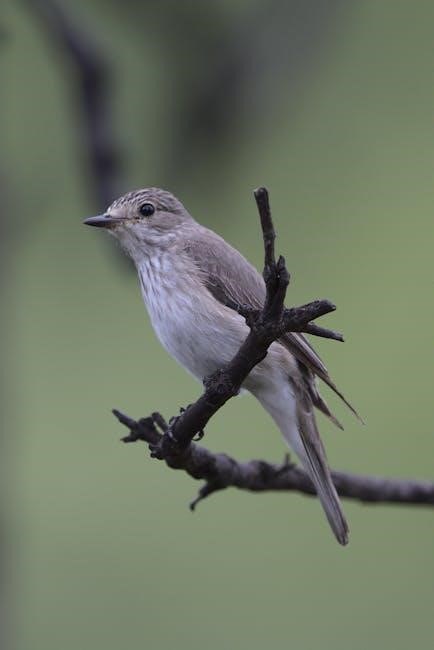
Pay close attention to size and shape, considering overall body proportions and bill morphology. The shape of a bird’s beak often reveals its feeding habits. Guides highlight these crucial details, offering comparative descriptions and illustrations.
Combine observations of multiple features for confident identification, rather than relying on a single characteristic.

Habitat and Behaviour
Field guides detail habitat preferences, aiding identification; woodland-dependent and common species of southeastern Australia are specifically highlighted with distribution maps and behavioral notes.
Woodland Bird Identification
Identifying birds within woodland habitats requires a focused approach, and field guides are essential tools. A valuable booklet specifically covers 104 woodland-dependent and commonly found species across southeastern Australia.
Successful identification relies on understanding key distinguishing features, carefully observed in the field. These guides enhance observation skills, providing crucial details for accurate species recognition. Distribution maps are also included, illustrating where specific birds are typically found within woodland environments.
This targeted information empowers birdwatchers to confidently identify woodland birds, contributing to a greater appreciation of Australia’s avian biodiversity.
Birds of Southeastern Australia
Southeastern Australia boasts remarkable avian diversity, making accurate identification crucial for both enthusiasts and researchers. Field guides specializing in this region are invaluable resources, detailing the numerous species inhabiting woodlands and beyond.
These guides often feature comprehensive coverage of 52 or more bird species commonly found throughout southeastern Australia. They emphasize key distinguishing features, aiding in quick and confident identification in the field.
Distribution maps are also vital, illustrating the typical ranges of each species within this diverse geographical area, enhancing observational skills and knowledge.

Common Australian Bird Species
The Compact Australian Bird Guide highlights numerous species, while resources like the Hume City Council guide detail native and introduced birds commonly observed.
Compact Australian Bird Guide Highlights
The Compact Australian Bird Guide stands out as an exceptionally user-friendly and visually appealing resource for bird enthusiasts of all levels. Its carefully designed content delivers crucial information, enabling swift and accurate identification of Australian bird species.
This guide is particularly valuable for field use, offering a practical approach to birdwatching. It’s designed to provide readers with the key details needed to confidently identify birds upon observation. The guide’s comprehensive nature, combined with its straightforward presentation, makes it a highly recommended tool for anyone seeking to deepen their understanding of Australia’s diverse avian population.
Native Birds of Hume City Council
Hume City Council has produced a dedicated field guide focusing on the native and introduced bird species commonly observed within its region. This valuable resource provides clear identification assistance, featuring images of each species to aid in accurate recognition.
The guide serves as an excellent tool for local residents and visitors alike, fostering a greater appreciation for the area’s avian biodiversity. It’s designed to be a practical companion for birdwatching, offering essential information for identifying birds encountered in Hume City Council’s parks and natural areas, promoting local ecological awareness.

Conservation and Bird Ecology
The study of bird ecology informs conservation efforts, teaching scientists how to best maintain the natural order of things regarding bird habitats and populations.
Threats to Australian Bird Populations
Australian bird populations face numerous threats, impacting their long-term survival. Aspergillosis, a non-contagious fungal disease, affects both poultry and wild birds, posing a health risk. Habitat loss, driven by land clearing and urbanization, significantly reduces breeding and foraging grounds.
Introduced species, like predators and competitors, disrupt ecosystems and prey on native birds. Climate change exacerbates these issues, altering habitats and food availability. Understanding these threats, aided by resources like field guides, is crucial for effective conservation strategies; Protecting habitats and mitigating climate change are vital steps towards ensuring the future of Australia’s diverse avian fauna.
The Role of Habitat Preservation
Habitat preservation is paramount for the survival of Australian birds. Woodland-dependent species, as highlighted in specialized guides, require intact woodland ecosystems for breeding and foraging. Protecting these areas safeguards biodiversity and ensures the continued existence of numerous bird species.
Conservation efforts, informed by field guides and ecological studies, focus on maintaining habitat connectivity and restoring degraded landscapes. Hume City Council’s field guide exemplifies local initiatives to identify and protect native bird habitats. Preserving these environments is not merely about protecting birds; it’s about maintaining the ecological balance essential for a healthy planet.
Resources for Further Learning
Explore online bird databases and recommended field guides, like “The Compact Australian Bird Guide,” to deepen your knowledge and identification skills.
Online Bird Databases
Numerous online resources significantly aid Australian bird identification and learning. These databases often feature detailed species accounts, including plumage descriptions, vocalizations, habitat preferences, and distribution maps – mirroring information found within comprehensive field guides like “The Compact Australian Bird Guide”.
Websites allow users to search by various criteria, such as location, size, or color, streamlining the identification process. Many also include user-submitted photos and recordings, offering real-world examples. These platforms are invaluable for both beginner and experienced birdwatchers, complementing traditional field guides with dynamic and constantly updated information. They provide a collaborative space for sharing observations and enhancing collective knowledge of Australia’s diverse avian fauna.
Recommended Field Guides
The Compact Australian Bird Guide stands out as an easily accessible and beautifully illustrated resource for quick identification of Australian birds. Lloyd Nielsen’s work is highly regarded for its authoritative, comprehensive, and straightforward presentation of ornithological information. For those seeking deeper knowledge, “Raptors of the World: An Identification Guide to the Birds of Prey” provides specialized expertise.
Additionally, field guides focusing on specific regions, like southeastern Australia, offer targeted information and detailed distribution maps. These resources, combined with online databases, empower birdwatchers to confidently identify species, understand their ecology, and contribute to conservation efforts.






Leave a Comment